Toy Storage Ideas for Small Family Homes (That Actually Stay Tidy)
Disclosure: This post may contain affiliate links. If you make a purchase through one of these links, we may earn a small commission at no extra cost to you.
Toy clutter has a way of taking over a small family home faster than almost anything else.
Even when you try to keep things contained, toys seem to spread into every room. They wind up under couches, along hallways, next to beds, and in corners you swear were clear yesterday. In a small space, that visual clutter can make the entire house feel chaotic, even when it’s otherwise clean.
The problem I find is that many toy storage ideas are designed for bigger homes, separate playrooms, or unrealistic expectations about how children actually play.
This post focuses on toy storage that works in small family homes – systems that are easy to use, flexible as kids grow, and simple enough to maintain without constant tidying.
Why Toy Storage Is So Hard in Small Homes
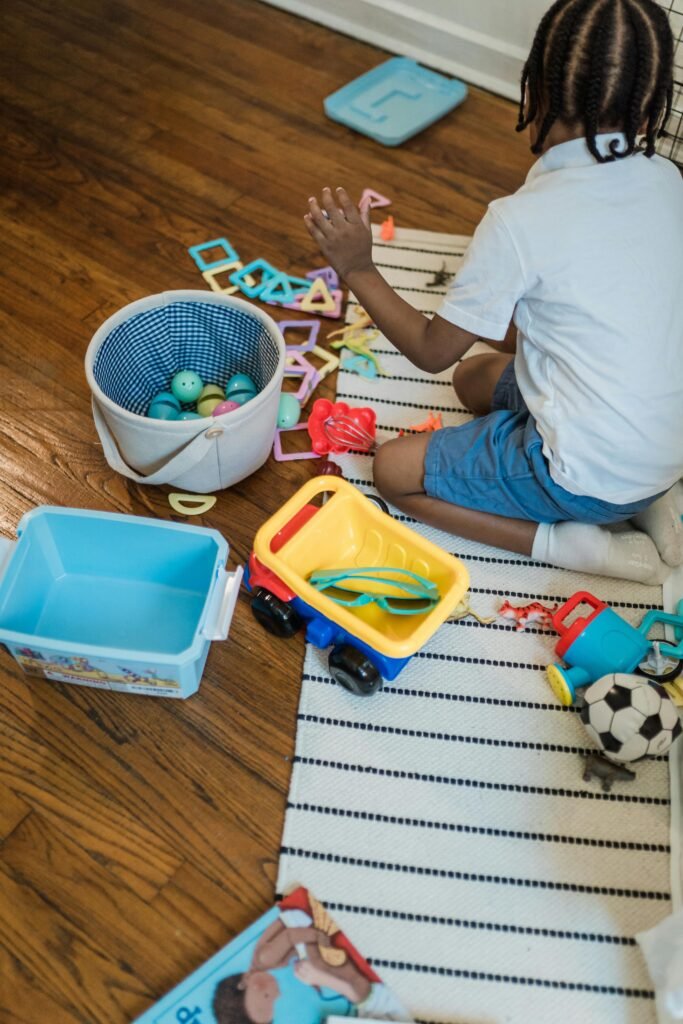
In small homes, toys rarely live in one dedicated room. They’re often shared between living spaces, bedrooms, and sometimes hallways or dining areas.
Toys also change quickly. What’s used daily one month might be ignored the next, which makes permanent or overly specific storage frustrating.
Another challenge is timing. Most toy mess happens during busy parts of the day, when stopping to tidy doesn’t feel realistic. Storage needs to support quick resets, not perfect organisation.
Understanding these realities makes it much easier to choose systems that actually last.
Start by Reducing the Volume of Toys
Before reorganising or buying storage, it helps to look at how many toys you’re managing.
You don’t need to declutter aggressively or get rid of things that would upset your children, but removing broken toys, outgrown items, or toys that never get used can make a big difference. Fewer toys naturally lead to less mess and easier storage. It often makes it easier for kids to find and use more of their toys because they aren’t buried under things they don’t use.
If toy clutter feels overwhelming across your whole home, stepping back to decluttering a small home with kids can help reset things before you focus on storage.
Choose Open Storage Over Perfect Sorting
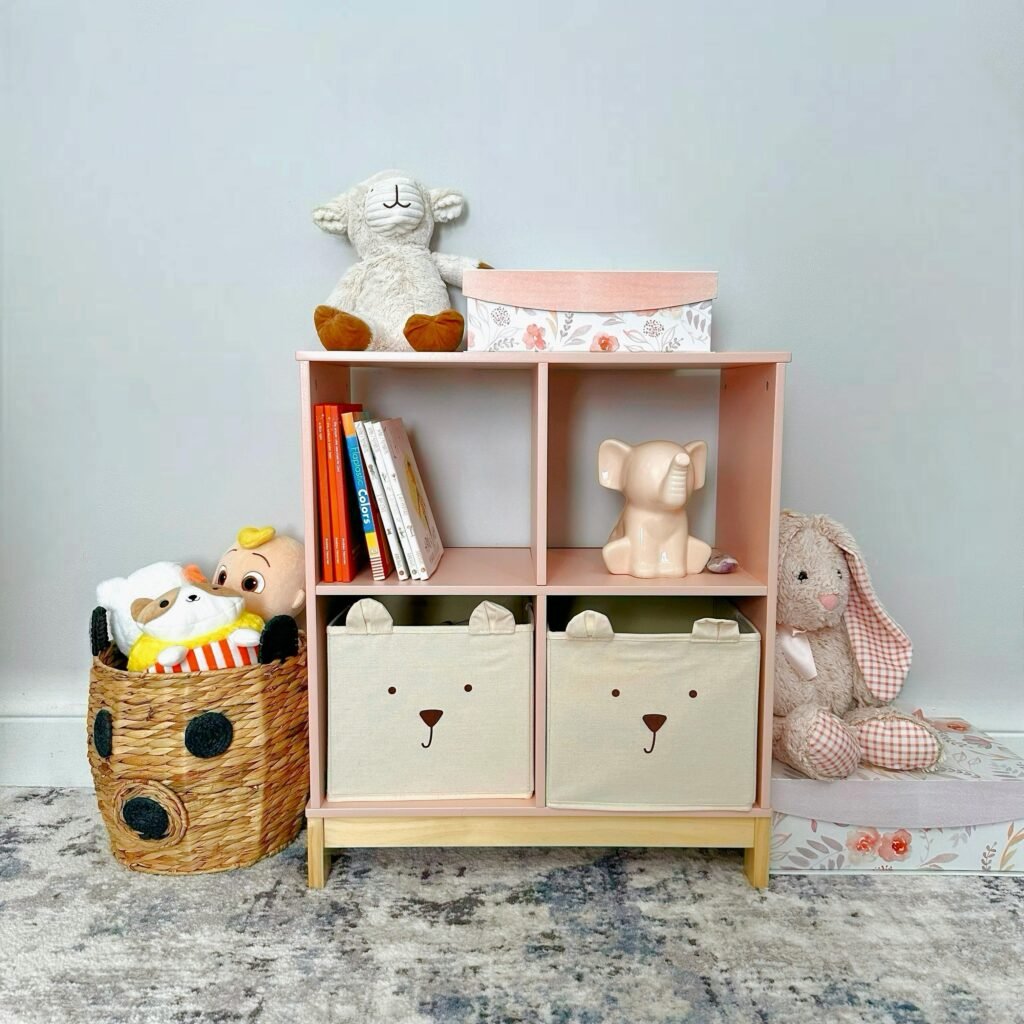
In small family homes, open storage usually works better than closed systems.
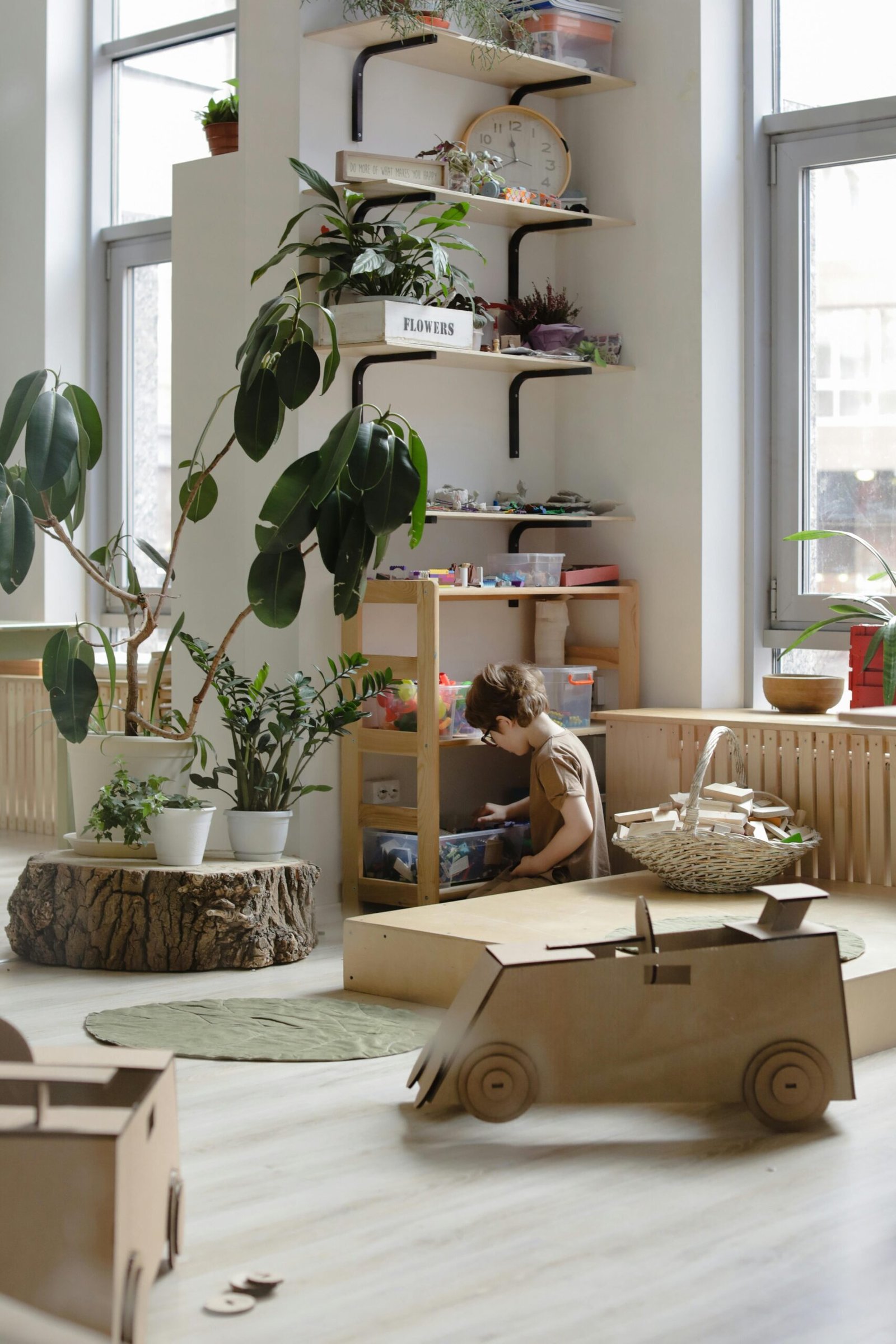
Bins, baskets, and open shelves make it easier for children to put toys away independently. They also make quick tidy-ups possible when time is limited.
Instead of sorting toys into very specific categories, group them loosely:
- Building toys together
- Soft toys together
- Pretend play together
- Cars and vehicles together
Remember, the goal is making it easy to put things back without thinking too hard.
Keep Toy Storage Where Toys Are Actually Used
One of the biggest mistakes with toy storage is keeping everything far away from where children play.
If toys are mostly used in the living area, some storage should live there too. Trying to store all toys in bedrooms often leads to toys being dragged out and left behind. It also means that you have to do multiple trips back and forth to tidy things up.
In shared spaces, low-profile storage works well:
- Baskets under consoles
- Shelves that blend with furniture
- Storage benches with open compartments
Containing toys where they’re used helps prevent them from spreading throughout the house.
Rotate Toys to Reduce Daily Mess
Toy rotation can be especially helpful in small homes.
This doesn’t need to be complicated. Simply storing some toys out of sight and swapping them occasionally can:
- Reduce the number of toys out at once
- Make play feel fresh again
- Make storage easier to manage
Even rotating just a few larger toys makes a huge difference in our house.
Make Toy Storage Easy for Children
Toy storage works best when children can manage it themselves, even if they don’t use it perfectly.
This might mean:
- Storage at child height
- Lightweight baskets
- Simple labels or visual cues
Expecting children to maintain complex systems usually leads to frustration for everyone. Simple, forgiving setups encourage participation without pressure.
As children grow, storage can evolve. What works for toddlers won’t look the same for preschoolers, and that’s normal.
Focus on Resetting, Not Constant Tidying
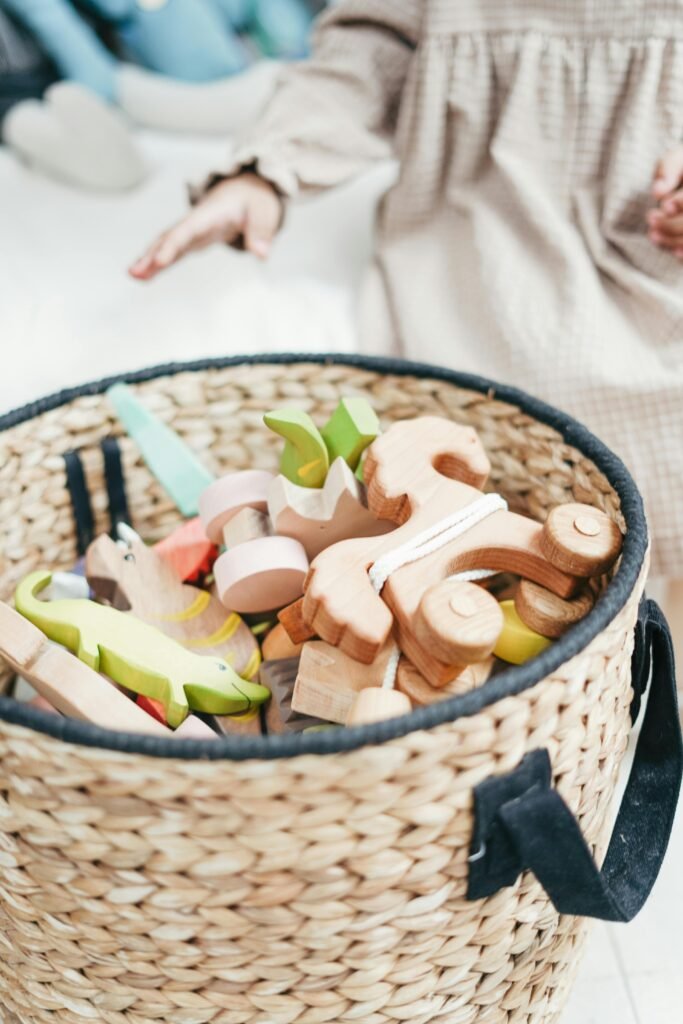
In small homes, toy storage is more about resetting spaces than keeping them tidy all day.
A quick reset might involve:
- Putting toys back into baskets
- Returning a few larger items to their place
- Clearing walking paths
These resets don’t need to happen at the same time every day. Flexibility matters more than routine.
If resets feel difficult, it’s often a sign that the system is too complicated or that there are simply too many toys in circulation. This ties closely into keeping a small family home organized with minimal daily effort.
Let Go of Toy Storage That Looks Perfect Online
Many toy storage ideas online look beautiful but aren’t practical for small, lived-in homes.
Perfectly styled shelves, colour-coordinated bins, and intricate labelling systems often require constant upkeep. In reality, those systems can add stress rather than reduce it.
A functional toy storage setup:
- Doesn’t need to look perfect
- Allows some mess during play
- Is easy to reset when needed
When storage supports real life, it tends to last much longer.
Final Thoughts
Toy storage in a small family home isn’t about controlling clutter completely. It’s about containing it in ways that make daily life easier.
Simple systems, fewer toys in rotation, and storage that matches how your family actually lives can reduce the constant feeling of mess — without requiring endless tidying.
The right setup can take the effort out of staying on top of toy clutter and stop it from taking over the rest of your home.