Entryway Organization for Small Family Homes
Disclosure: This post may contain affiliate links. If you make a purchase through one of these links, we may earn a small commission at no extra cost to you.
If there’s one space in a small family home that feels like it’s constantly out of control, it’s usually the entryway.
Shoes get kicked off the moment everyone walks in. Bags land wherever there’s room. Hats, jumpers, parcels, and random bits that don’t belong anywhere else seem to collect there without notice. And because the entryway is often right next to the living space, that clutter tends to spill out and make the whole house feel messier than it actually is.
Organizing an entryway in a small home is about containing everyday chaos so it doesn’t take over the rest of your space.
This guide is focused on realistic entryway organization for families with young children. By that I mean systems that are quick to use, easy to maintain, and flexible enough for real life.
Why Entryways Get Overwhelmed So Quickly
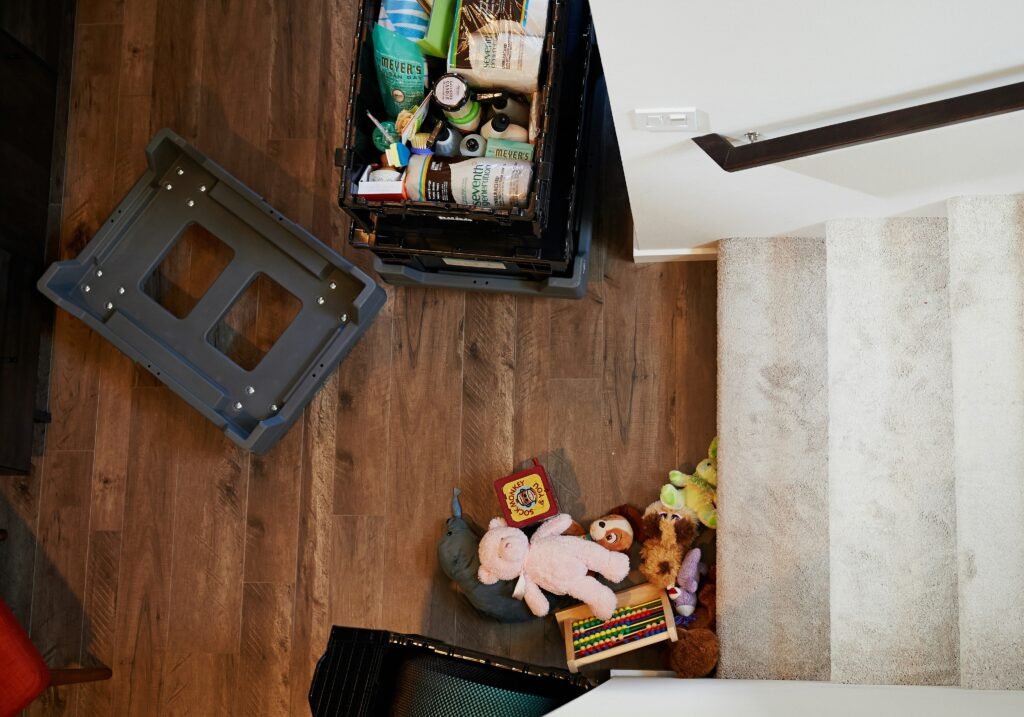
Entryways are where everything comes and goes, often during the busiest parts of the day.
You’re usually arriving home tired, juggling kids, carrying bags, or trying to get everyone out the door on time. That’s not when anyone has a chance to carefully put things away.
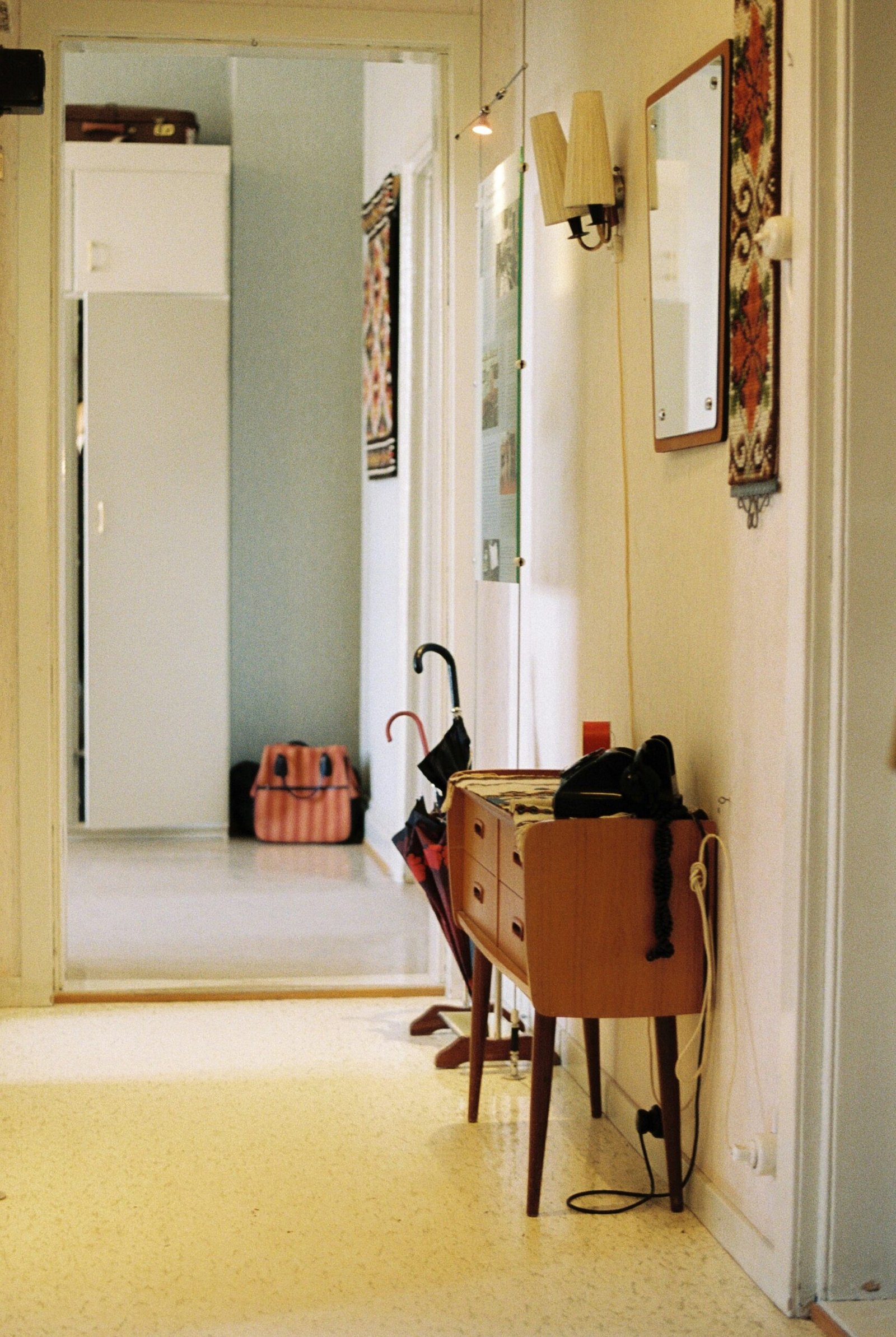
In small homes, entryways are often narrow, shared with hallways, or part of another room entirely. There’s very little room for traditional storage, and clutter doesn’t have anywhere to hide.
That’s why entryway systems need to work almost automatically. If something takes too much effort to put away, it simply won’t happen. Just know that’s not a personal failure, it’s just how daily life works.
Start by Removing What Doesn’t Belong
Before adding storage or reorganizing anything, take a few minutes to clear out items that don’t actually need to live in the entryway.
Look for:
- Shoes that aren’t worn regularly
- Bags that belong in bedrooms or the car
- Items that have been dropped there “for now”
You don’t need to make the space perfect. Just removing the obvious extras can make a small entryway feel much more manageable.
If you’re finding that clutter is building up everywhere, not just here, it can help to step back and look at decluttering a small home with kids more broadly first.
Think in Zones, Not Systems
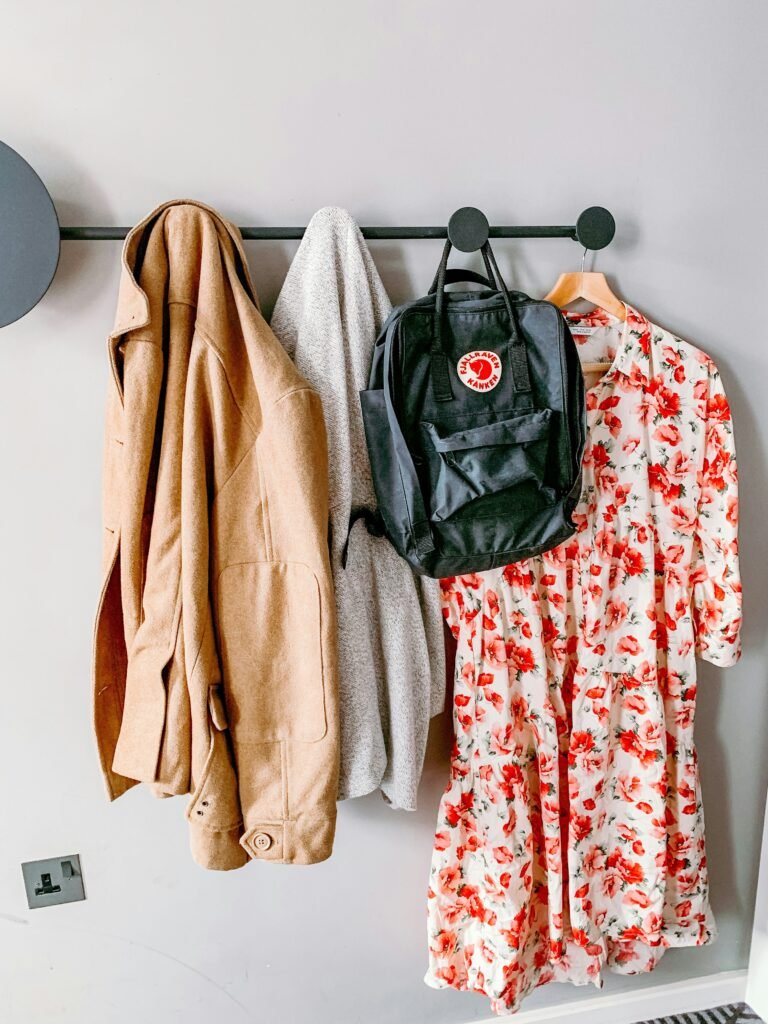
In a high-traffic space like the entryway, simple zones work better than detailed systems.
Most small family entryways only need a few basic zones:
- Shoes
- Bags and backpacks
- Outerwear
- Daily essentials like hats or keys
These zones don’t have to be separate furniture pieces. They might be hooks on a wall, a couple of baskets, or a small shelf. We are big fans of baskets in our house because they work with children’s (and husband’s) tendency to drop their stuff on their way through rather than trying to fight it.
The goal is just to give things a general home, so they don’t end up spread throughout the house.
Choose Storage That People Will Actually Use
The best entryway storage isn’t the most attractive, it’s the easiest.
For families with young children, open storage usually works better than closed storage. Hooks are easier than hangers for outerwear. Baskets are easier than drawers. A bench with open cubbies is often easier than a cabinet that needs to be opened and closed.
If shoes always end up on the floor, that’s useful information. Storage should meet items where they naturally land, rather than trying to force different habits.
In small spaces, fewer storage pieces almost always work better than trying to squeeze in too much.
Make the Entryway Work for Kids Too
Entryways are much easier to manage when children can look after their own things, even if they don’t do it perfectly.
This might mean:
- Hooks at a lower height for bags and jackets
- A small basket for each child’s shoes
- A consistent spot that they can reach for school or daycare items
The aim isn’t neatness. It’s participation. Even a little independence from kids reduces how quickly clutter builds up and over time builds tidy habits.
As children grow, these systems can change. What works now doesn’t need to work forever.
Focus on Maintenance, Not Tidying
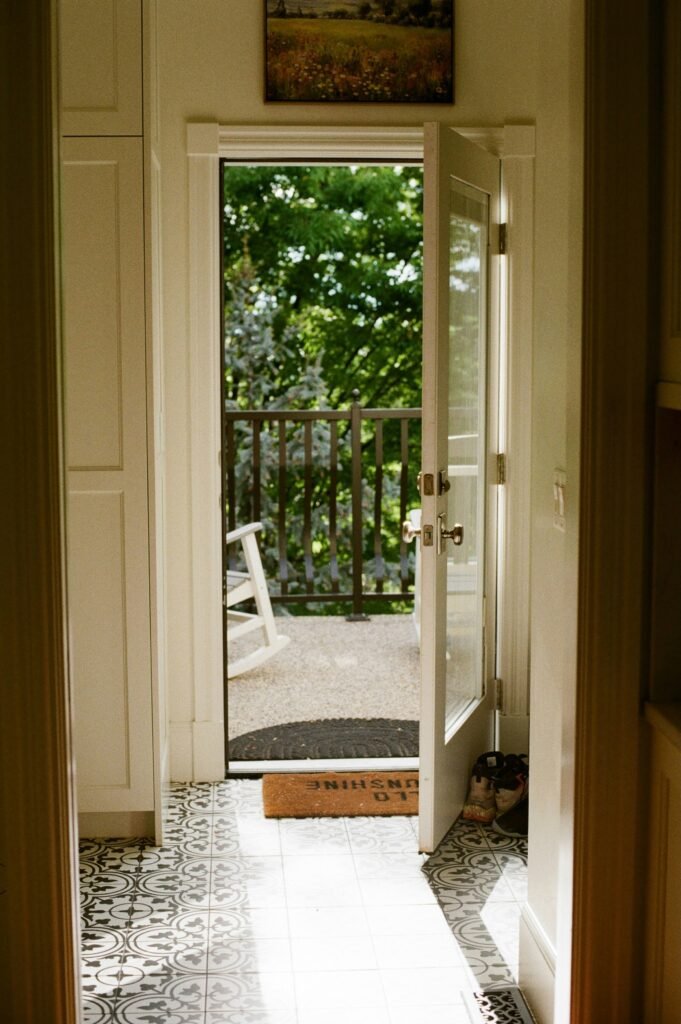
Entryways usually need quick resets rather than big clean-ups.
A simple reset might involve:
- Putting shoes back into their zone
- Hanging bags on hooks
- Removing anything that doesn’t belong
This doesn’t need to happen at the same time every day. Some days will be messier than others, and that’s normal.
If maintaining your entryway feels hard, it might mean that your system is too complicated. Simplifying things usually helps more than adding storage. This same idea applies to keeping a small family home organized overall: fewer steps make everything easier.
Let Go of Perfect Entryway Expectations
Small family entryways won’t stay clear all day, and they’re not meant to.
In this season of life there will be busy mornings, rushed afternoons, and days when everything gets dropped at the door. That doesn’t mean the system isn’t working.
Instead of aiming for a flawless entryway, aim for containment. When clutter stays in one place instead of spreading throughout the house, the system is doing its job.
A functional entryway doesn’t need to look styled. It just needs to support daily life.
When the Entryway Is Also a Hallway or Living Space
If your entryway shares space with a hallway or living area, as so many small homes do, storage choices matter even more.
In these situations:
- Choose storage that blends visually (try neutral, similar colours for shelves or storage baskets so they don’t draw attention)
- Keep only daily essentials near the door
- Move less-used items elsewhere
Sometimes the simplest solution is limiting what lives in the entryway at all.
Final Thoughts
Entryway organization in a small family home is about making coming and going easier, and stopping everyday clutter from spreading into the rest of the house.
A few realistic systems, flexible expectations, and storage that matches real habits can make a big difference, even in the smallest spaces.