Decluttering a Small Home When You Have Young Children
Disclosure: This post may contain affiliate links. If you make a purchase through one of these links, we may earn a small commission at no extra cost to you.
Decluttering a small home can feel overwhelming at the best of times. Add young children into the mix, and it can start to feel almost impossible.
Toys multiply quickly, sentimental items pile up, and everyday essentials seem to spill into every available surface. Even when you want less clutter, it’s hard to know where to start — especially when time and energy are limited.
The problem usually isn’t a lack of motivation. It’s that most decluttering advice isn’t designed for families with young children living in small homes.
This guide takes a more realistic approach. Instead of aiming for a perfectly decluttered house, the focus here is on reducing friction, freeing up space where it matters most, and creating a home that’s easier to live in day to day.
Why Decluttering Feels Harder With Young Children
Decluttering with kids isn’t just about deciding what to keep and what to let go of. There are emotional and practical layers involved that make the process heavier.
Children’s items often carry sentimental value, even when they’re no longer used. There’s also the fear of getting rid of something you might need again — especially when children grow and change so quickly.
On a practical level, children are constantly bringing new items into the home. Gifts, hand-me-downs, artwork, and everyday clutter can quickly undo progress, making decluttering feel pointless.
Understanding this helps shift expectations. Decluttering with kids is not a one-time event. It’s an ongoing process that needs to be gentle, flexible, and realistic.
Start With the Right Goal
In a small family home, the goal of decluttering isn’t to own as little as possible. It’s to make daily life easier.
A decluttered space should:
- Be easier to clean and reset
- Support everyday routines
- Reduce visual and mental clutter
- Leave room for play and movement
If an item actively makes daily life harder — even if it’s useful “in theory” — it may not belong in your space right now.
Declutter in Short, Manageable Sessions
One of the biggest mistakes families make when setting out to organize a small family home is trying to declutter everything at once.
Instead, work in short, focused sessions. Even ten or fifteen minutes can be enough to make progress without becoming overwhelmed.
Choose one small area at a time, such as:
- A single drawer
- One shelf A toy basket
- A small section of a cupboard
Stopping before you’re exhausted makes it more likely you’ll come back to it later.
Focus on High-Impact Areas First
When space is limited, decluttering the right areas can make a noticeable difference very quickly.
High-impact areas often include:
- Entryways where bags and shoes pile up
- Kitchen benchtops and drawers
- Living room floors and surfaces
- Bathroom storage
Clearing even a small amount of clutter from these spaces can make the whole home feel calmer.
Decluttering Toys Without the Guilt
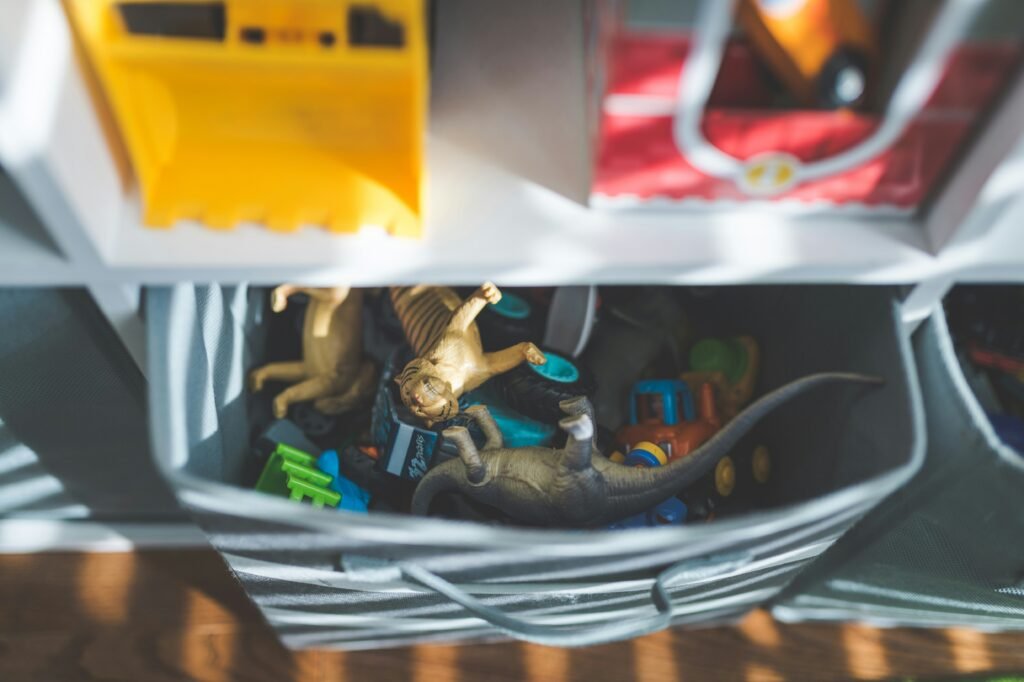
Toys are often the most emotionally difficult category to declutter.
A helpful approach is to focus on use, not value. Ask:
- Is this toy being played with regularly?
- Does it fit my child’s current stage?
- Does it add stress or clutter to shared spaces?
You don’t have to get rid of everything at once. Rotating toys — keeping some stored away and some out — can reduce clutter while still preserving variety.
Broken toys, incomplete sets, and items your child has clearly outgrown are often the easiest place to start.
Be Honest About Storage Limits
In a small home, storage capacity matters. If you don’t have space to store something easily, that’s valuable information.
Instead of forcing items to fit, let the space guide your decisions. If storage is overflowing, something likely needs to go. This is a big one in our home. We are very conscious of the fact that we simply don’t have storage spaces for large toys so we stick with smaller things or play sets than can be disassembled for storage.
Decluttering becomes much easier when you accept that your home has limits — and that those limits don’t reflect failure, just reality.
Let Go of “Just in Case” Items
Many homes are filled with items kept for hypothetical future situations.
While some flexibility is necessary with children, keeping too many “just in case” items can quickly overwhelm a small space.
A helpful rule is to ask:
Would I realistically replace this if I needed it again? Is this item worth the space it takes up right now?
Often, the answer is no — and letting go creates immediate breathing room.
Create Simple Decluttering Boundaries
Clear boundaries make decluttering decisions easier.
Examples include:
- One shelf per child for toys
- One bin for art supplies
- One drawer for miscellaneous items
When a boundary is full, something has to leave before something new comes in. This keeps clutter from slowly creeping back.
How to Maintain a Decluttered Small Home
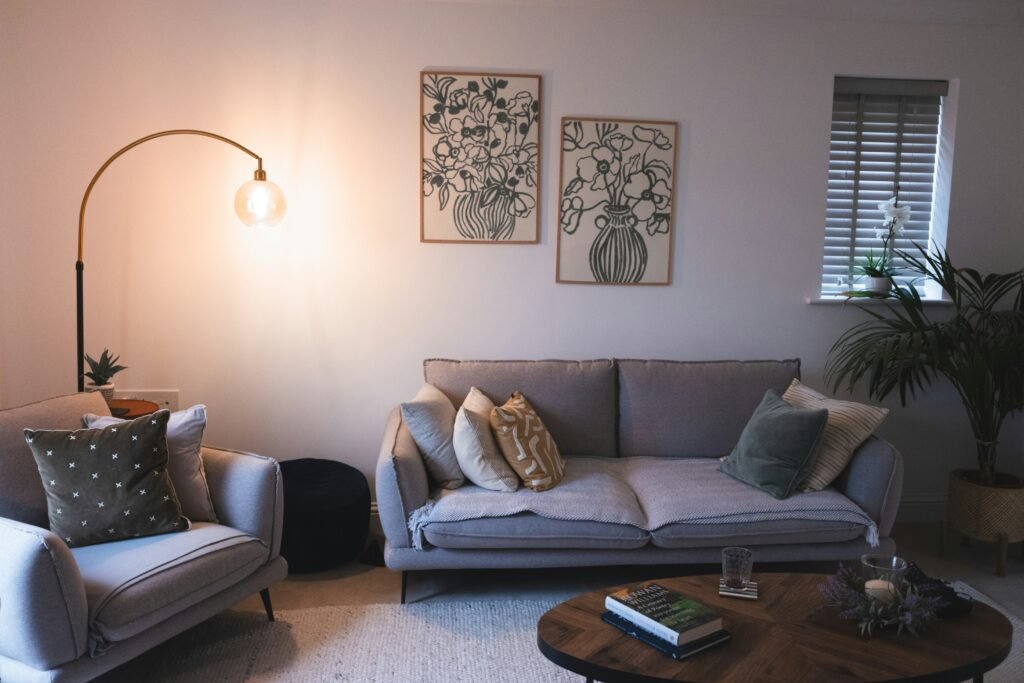
Maintaining a decluttered small home is just as important as the initial declutter.
Small, regular habits work best:
- A quick daily reset of shared spaces
- A weekly check-in on clutter-prone areas
- A monthly review of items that aren’t being used
Decluttering doesn’t need to be perfect to be effective. Progress comes from consistency, not intensity.
When Decluttering Feels Too Hard
If you’re feeling overwhelmed, it’s okay to pause.
Choose the easiest category. Remove the obvious items. Stop early. Decluttering should reduce stress — not add to it.
Even small changes can make a noticeable difference in how a space feels and functions.
Final Thoughts
Decluttering a small home with young children is less about discipline and more about alignment.
When your belongings match your space, your routines, and your current season of life, everything feels lighter. You don’t need to aim for minimalism or perfection — just enough space to live comfortably.
Decluttering is a process, and it’s allowed to move at a pace that works for your family.